Luxury Travel Skincare: Redefining “High-End” on the Move
Luxury travel skincare sits at the intersection of two highly ritualized worlds: elevated skincare and the realities of life in transit. For many people who invest in sophisticated regimens, stepping onto a plane or moving through different climates raises a precise question: how do you maintain the standards of a high-end routine when your environment is dehydrating, unpredictable, and constrained by luggage rules? Understanding what genuinely matters in this niche helps distinguish thoughtful choices from purely aesthetic ones.
What “Luxury” Means in a Travel Skincare Context
Luxury skincare is often associated with indulgent textures, refined packaging, and complex active blends. In the context of travel, however, the concept shifts from lavishness to efficiency and protection. A luxury travel regimen is less about owning the most ornate products and more about maintaining:
- A consistent routine your skin recognizes
- A high level of formulation quality and comfort
- Adaptability to dry cabin air, changing time zones, and varied climates
Rather than an endlessly layered ritual, luxury travel skincare tends to favor a curated edit: formulations that multitask, remain stable in transit, and feel comfortable even when skin is stressed by recycled air, UV exposure, or frequent cleansing. The “luxury” element becomes as much about resilience and predictability as about sensorial pleasure.
Formulation Philosophy: Precision vs. Excess
High-end skincare often promises complex formulations with multiple actives, advanced delivery systems, and a certain degree of “intelligence” in how products interact with the skin barrier. When you’re traveling, the relevant question is not how many actives are present, but how precisely they are chosen and balanced for stressed skin.
Many luxury formulations emphasize:
- Barrier-supporting components such as lipids, ceramides, and humectants
- Textural elegance that spreads easily and layers without pilling
- Fragrance profiles designed to feel calming or refined
Yet there are trade-offs. Very elaborate formulas may include a broad range of botanical extracts, fragrances, and sophisticated emulsifiers that some more reactive skin types might not tolerate well under the added pressure of dry cabins or abrupt climate shifts. The philosophy that works well at home—maximalist, sensorial, and layered—may not be the most functional when you are repeatedly cleansing in an airport sink or sleeping upright on an overnight flight.
A travel-focused luxury mindset favors disciplined formulation: fewer products, each doing more, with textures and compositions that remain comfortable on compromised or dehydrated skin.
Ingredient Quality vs. Ingredient Storytelling
One of the defining characteristics of luxury skincare as a category is narrative: rare extracts, proprietary complexes, and evocative sourcing stories. When adapted to travel, this storytelling can still be present, but its relevance is worth examining critically.
High-quality ingredients can mean:
- Stable forms of antioxidants that resist degradation in changing temperatures
- Humectants and emollients that maintain hydration across low-humidity environments
- Filters and supporting ingredients that maintain even coverage and comfortable wear in sun-exposed travel conditions
On the other hand, travel places specific demands on your products: they are repeatedly opened, exposed to temperature fluctuations, and sometimes stored in conditions far from ideal (overhead bins, hot cars, beach bags). Under these circumstances, quiet technical attributes—packaging integrity, preservative systems, airless components—may be more important than the romantic origin of an extract.
Luxury branding sometimes leans heavily on ingredient lore. For travel, a more functional lens can be useful:
- Does this formula remain stable outside a perfectly controlled bathroom?
- Is the ingredient profile likely to remain comfortable if my skin is sleep-deprived, dehydrated, or exposed to unfamiliar water?
This doesn’t diminish the value of meticulously sourced botanicals or advanced complexes, but it reframes them as part of a broader quality equation rather than the sole marker of “high-end.”
Sensory Experience and Formulation Elegance on the Road
Sensory refinement is one of luxury skincare’s most visible signatures: textures that melt, transform, or cushion; subtle, layered scents; finishes that make skin feel immediately refined. Travel alters how you experience all of this.
On a long flight or in a dry hotel room, “elegant” formulations may need to prioritize:
- Minimal tackiness, so products remain comfortable under masks or while resting on fabric
- Low migration, especially around the eyes, when you may be sleeping in awkward positions
- Lightweight yet occlusive textures that prevent water loss in arid environments
Travel often compresses your routine into moments—before boarding, after landing, before sleep—rather than leisurely rituals. This increases the value of:
- Quick-absorbing formulas that don’t require prolonged massaging
- Products that can sit comfortably under makeup or sunscreen without rolling or separating
- Textures that remain uniform even if the product has been jostled in transit
Luxury does not disappear in this context; it simply becomes more discreet. A sensorially refined travel product may feel less like an overt “spa moment” and more like a calm, predictable, comfortable presence throughout long hours of movement.
Skin Compatibility and Sensitivity in Transit
Even skin that is usually resilient can shift under travel conditions. Changes in water hardness, air quality, climate, and routine can all influence how your complexion responds. For those who lean toward high-end formulations, assessing compatibility becomes especially important.
Key considerations for luxury travel routines include:
- Familiarity over novelty: Introducing entirely new, highly active formulas while traveling can increase the chance of unexpected reactions at the worst possible time.
- Barrier-first thinking: Supporting the skin’s moisture barrier with emollients, humectants, and gentle cleansing can be more impactful than layering many potent actives.
- Fragrance and botanicals: While often central to luxury identity, these components can occasionally be more sensitizing when skin is already stressed. Those prone to reactivity may gravitate toward simpler, more neutral formulations during trips, even if their at-home routine is more elaborate.
Because travel also makes it harder to respond quickly to issues (you may not have access to your full skincare wardrobe), the most refined approach is usually conservative: rely on high-quality products your skin already knows, and treat travel as a moment to maintain—not reinvent—your routine.
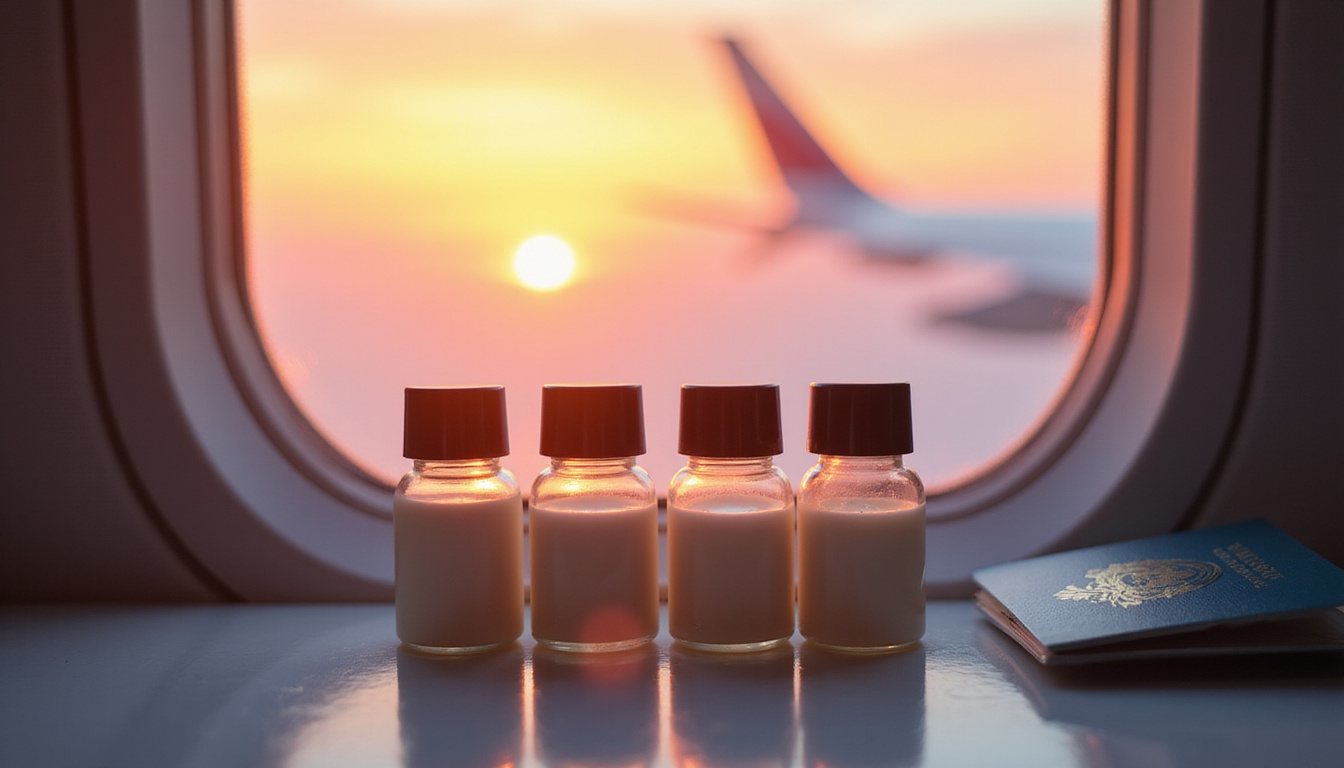
Packaging, Portability, and Hygiene as Quiet Luxury
In the luxury category, packaging is often an aesthetic centerpiece: weighty jars, mirrored caps, intricate closures. While visually striking on a bathroom shelf, these design choices are rarely optimized for travel. For on-the-move use, the most luxurious choice may be the one that looks understated but protects your formula and your skin.
Considerations that often matter more than ornamentation:
- Airless pumps or tubes that limit exposure to air and fingers
- Opaque containers that shield light-sensitive ingredients
- Secure closures that resist leakage in cabins and luggage
- Materials that can withstand temperature variation without warping or cracking
Hygiene is an underappreciated facet of high-end skincare, particularly on the road. Open jars handled with unwashed hands while navigating airports or trains introduce a different risk profile than a controlled, at-home environment. Packaging that minimizes contamination aligns closely with a truly elevated standard, even if it appears simpler than the decorative norm associated with luxury.
Brand Transparency and Informed Choice
In any category, but especially a prestige-focused one, transparency can be a meaningful marker of quality. For travel-specific use, certain information becomes particularly relevant:
- Clear ingredient lists and explanations of key complexes
- Statements about stability, storage, and recommended conditions
- Guidance on how products can be integrated with others, especially when layering is simplified on trips
Reputable organizations such as the American Academy of Dermatology offer general guidance on travel and skincare—highlighting the importance of moisturizing, sun protection, and gentle cleansing during travel and in dry air (source: AAD). While such resources do not differentiate by price tier, they underscore that fundamental principles of skin support remain the same regardless of whether a product is marketed as luxury.
A brand that treats its audience as informed partners—offering technical detail rather than only emotive narrative—aligns well with a more analytical, travel-aware approach to skincare.
Editing a High-End Routine for Travel
Maintaining a luxurious standard while respecting the constraints of travel is largely an exercise in curation. Instead of recreating an entire bathroom shelf on the road, many seasoned travelers focus on a carefully chosen core.
A streamlined yet elevated travel routine commonly focuses on:
- A gentle, non-stripping cleanser suitable for different water types
- A hydrating, comfortable leave-on step (serum or essence)
- A barrier-supporting moisturizer suited to drier conditions
- Broad-spectrum sun protection appropriate for planned activities
- One optional “treatment” step that aligns with your skin’s main priority
Within this structure, luxury can manifest in multiple ways: finely tuned textures, sophisticated but skin-compatible humectants and lipids, well-designed packaging, or thoughtfully balanced actives. The key is consistency and practicality, not maximalism.
When Luxury Travel Skincare Aligns—and When It Doesn’t
There are situations where a high-end regimen maps naturally onto travel needs:
- You have an established set of products your skin tolerates well, available in travel-friendly formats or decanted hygienically
- You value sensorial comfort and subtle refinement to counterbalance the discomforts of long flights or intense itineraries
- Your priority is maintaining your skin’s usual condition, rather than experimenting or aggressively targeting new concerns while away
Conversely, luxury formulations may be less aligned with your needs if:
- Packaging is fragile, heavy, or prone to leaking
- Textures or fragrances that feel pleasant at home become overwhelming in confined, dry environments
- Highly complex formulas increase the likelihood of reactivity when your skin is already under stress
The category offers substantial strengths—refined textures, sophisticated ingredient systems, and a heightened emphasis on experience—but does not inherently guarantee better performance under travel-specific stressors. Thoughtful pairing of product design with circumstance is crucial.
FAQ: Luxury Travel Skincare and High-End Routines
Q1: Is an elaborate, multi-step luxury routine necessary while traveling?
Not necessarily. While some people enjoy replicating their full regimen on the road, many find that travel is better served by a concise, high-quality sequence. A smaller number of well-formulated products—focused on cleansing, hydration, barrier support, and protection—often aligns more closely with the realities of transit and changing environments.
Q2: Does luxury skincare perform better in airplane cabins and dry climates?
Performance varies widely by formulation. Some high-end products are specifically designed to support the skin barrier and hydration in low-humidity conditions and may feel particularly comfortable during flights. Others prioritize sensorial or aesthetic qualities that are less directly tied to travel needs. Examining texture, humectant and emollient content, and packaging can be more informative than the category label alone.
Q3: How should I adapt my high-end routine for frequent international trips?
A practical approach is to identify your skin’s non-negotiables—such as gentle cleansing, reliable hydration, and consistent sun protection—and build a compact set around them. For frequent travelers, it can be helpful to keep a dedicated, pre-packed kit of products that your skin knows well, in secure and travel-appropriate containers. This minimizes disruption to your routine while respecting security regulations and baggage limitations.
A More Considered Definition of Luxury on the Move
Viewed through the lens of travel, luxury skincare becomes less about ornate presentation and more about intelligent design. The most meaningful markers of quality in this context are stability, predictability, compatibility with stressed skin, and formulations that feel quietly supportive rather than demanding.
Investing in elevated textures, thoughtful ingredient systems, and robust packaging can be worthwhile for those who value a refined routine wherever they go. At the same time, understanding that fundamental skin needs do not change simply because a product is positioned as luxury allows for more grounded decisions.
Ultimately, a truly high-end travel regimen is one that respects both your skin and your circumstances: it travels well, behaves reliably under pressure, and offers a measured sense of comfort—without relying on excess, promises, or spectacle to justify its place in your carry-on.