What Defines a Luxury Exfoliator in Modern Skincare
In a market where exfoliating products range from simple scrubs to sophisticated serums, the idea of a luxury exfoliator has evolved far beyond a product that merely “polishes” the skin. Within the luxury skincare category, exfoliation is framed less as an occasional reset and more as a carefully calibrated step in a long-term routine. What distinguishes these products is not only the price bracket or branding, but a particular approach to formulation, texture, tolerance, and the overall user experience.
Understanding what genuinely sets luxury exfoliating products apart from mass and conventional premium options can help consumers make more informed choices—especially when expectations around performance, comfort, and skin compatibility are high.
Beyond the Label: What “Luxury” Means for Exfoliators
The term “luxury” in skincare is fluid, but in the context of exfoliators, it usually signals a combination of factors rather than a single defining trait. Common characteristics in this category include:
- More complex, layered formulations (not just “acid in a base” or “scrub in a cream”)
- Emphasis on sensory refinement: textures, scents, and packaging
- Marketing narratives around rare, patented, or lab-developed ingredients
- Positioning as part of a broader, curated regimen
However, these signals do not inherently guarantee superior results. Luxury exfoliating products often aim for a balance of effective skin renewal with minimized discomfort, and this typically translates into more nuanced formulations, longer development timelines, and, in some cases, more extensive in-house testing. Whether that translates into visible benefits will depend strongly on individual skin type, tolerance, and routine.
Ingredient Quality vs. Ingredient Storytelling
One of the clearest dividing lines between mass and luxury exfoliators is how ingredients are selected, combined, and communicated.
1. Exfoliating agents: more than just “stronger acids”
Luxury exfoliators frequently use familiar categories of actives—but with more attention to concentration, pH, and synergy:
- Alpha hydroxy acids (AHAs) such as glycolic, lactic, or mandelic acids
- Beta hydroxy acids (BHAs) such as salicylic acid
- Polyhydroxy acids (PHAs) sometimes used as gentler options
- Enzymes (e.g., from fruits or fermentation) for non-abrasive, surface-level exfoliation
- Refined physical particles (such as ultra-fine, spherical beads) for controlled mechanical action
In luxury formulations, the focus is often on how these actives are buffered, stabilized, and combined with other ingredients to modulate their strength and reduce the likelihood of irritation—rather than simply using the highest possible concentration.
2. Supportive and cushioning complexes
A key point of differentiation is the surrounding “architecture” of the formula. Many higher-end exfoliators include multiple supportive ingredients intended to maintain comfort:
- Humectants (such as glycerin) to attract water into the skin’s surface layers
- Emollients and lipids to reduce the tight, stripped sensation
- Soothing agents like certain botanical extracts or derivatives of well-known calming ingredients
- Barrier-supportive components, including ceramide analogues or fatty acids, to offset the drying effect of exfoliation
This kind of cushioning can create a more “elegant” experience, especially for those who previously found exfoliation too harsh.
3. Storytelling vs. substantiation
Luxury brands often weave intricate narratives around:
- Proprietary complexes or fermentation filtrates
- Rare botanicals, marine extracts, or bioengineered actives
- Multi-step extraction or refinement processes
Some of these may be backed by laboratory data generated by the brand; others lean more on concept than on publicly available research. Independent scientific literature tends to center around well-established actives like AHAs, BHAs, and gentle alternatives such as PHAs, rather than proprietary blends (source: American Academy of Dermatology).
A critical consumer approach is to distinguish between:
- Ingredients with widely studied mechanisms (e.g., lactic acid’s role in surface exfoliation and hydration), and
- Ingredients whose benefits are primarily communicated through brand-owned language and visuals.
Both can appear in a luxury exfoliator; the value lies in how they are used together and how your skin responds over time.
Sensory Experience and Formulation Elegance
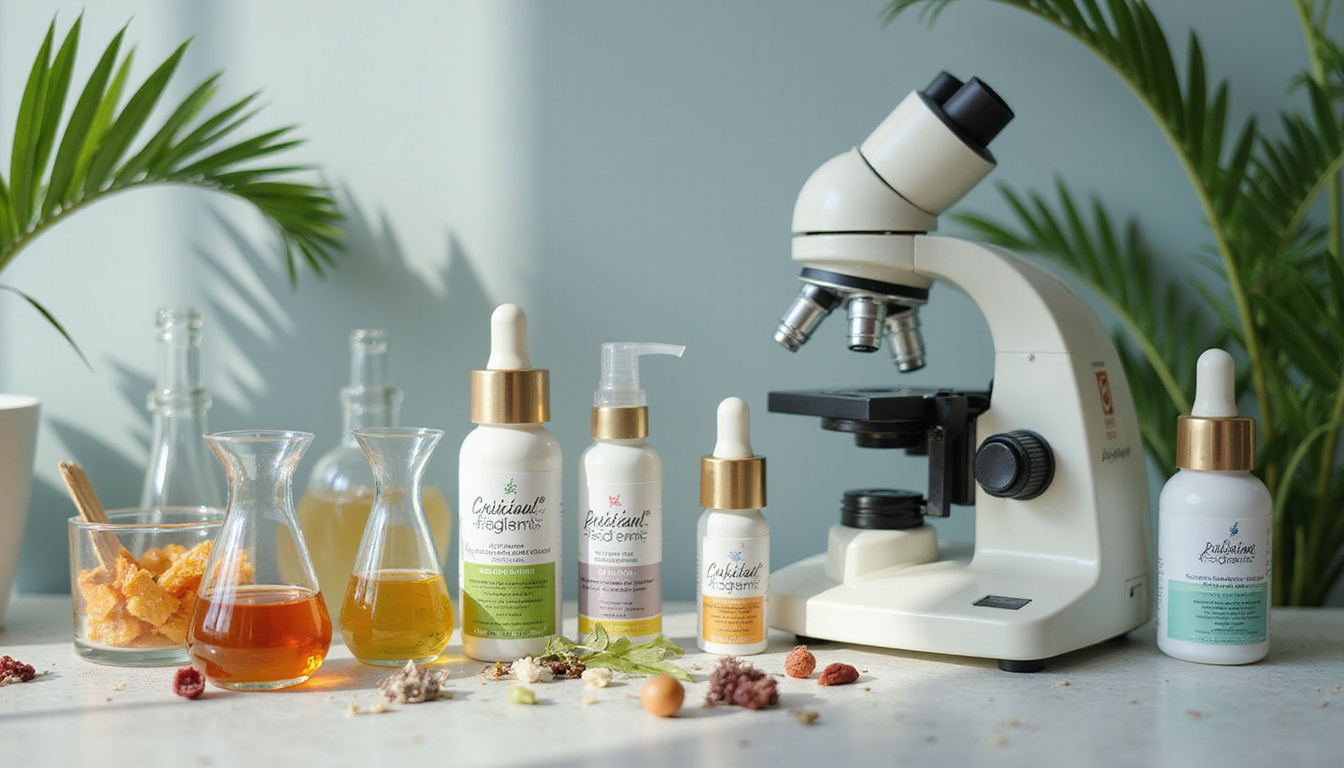
Luxury skincare is known for placing considerable emphasis on sensory qualities. Exfoliators are no exception, and the appeal often rests on how seamlessly they fit into a more ritualized routine.
1. Texture as a marker of refinement
Textures in this category tend to be more considered:
- Fluid tonics and essences that absorb quickly without stickiness
- Rich gels or emulsions that cushion the skin during use
- Fine-grain physical exfoliators engineered to be uniform and less abrasive
A luxury exfoliator is often formulated to feel lightweight yet substantial, with an application experience that suggests control and precision rather than harsh scrubbing or stinging.
2. Fragrance and sensorial cues
Fragrance is used thoughtfully in many high-end ranges, designed to feel subtle and layered rather than overtly perfumed. This can enhance the “ritual” aspect of exfoliation but may be a drawback for those with fragrance sensitivities.
Other sensory markers include:
- Soft slip and glide during massage
- Absence (or rapid dissipation) of tacky residue
- Controlled tingling that does not escalate to burning, in formulas designed to signal activity
These details contribute to a sense of “formulation elegance,” yet they also highlight a key tension: products optimized for pleasure may not always be the gentlest for reactive skin, particularly if fragranced.
Skin Compatibility and Sensitivity Considerations
Luxury exfoliators often aim to occupy the space between noticeable effect and lasting comfort. However, higher-end does not automatically equate to safer or more suitable for every skin type.
1. Strength modulated by design, not by assumption
Some luxury exfoliating treatments are formulated for nightly or near-nightly use at moderate strength, while others are designed as occasional, more intensive treatments. The position of the product within the brand’s system, the recommended frequency, and the instructions for use are all important clues to:
- How potent the exfoliating component might be
- Whether it is meant to replace, or sit alongside, other actives in your routine
2. Multi-active formulations: benefits and trade-offs
A common characteristic in the luxury category is the inclusion of multiple active categories in a single exfoliator—acids combined with hydrating agents, brightening ingredients, and soothing extracts.
Potential benefits:
- A more streamlined routine if one product covers several functions
- A formula carefully balanced by chemists who considered how these actives interact
Potential limitations:
- Less flexibility in adjusting strength or frequency of each active individually
- Higher risk of overloading sensitive skin if layered with other potent products
For complex or reactive skin, “less but better structured” may be a more important principle than sheer sophistication.
3. Physical vs. chemical: how the category frames the choice
In the luxury segment, there has been a noticeable shift away from aggressive scrubs with large, irregular particles toward:
- Non-abrasive chemical exfoliants
- Enzyme-based formulas
- Microfine, uniform particles in hybrid products
This trend reflects both evolving consumer preferences and a broader emphasis on barrier respect. Still, even a refined physical exfoliator can be overused if applied with excessive pressure or frequency.
Brand Transparency, Testing, and Consumer Trust
Luxury skincare brands often rely heavily on trust—trust that the product is thoughtfully engineered, thoroughly tested, and respectful of longer-term skin health.
Key aspects of transparency that discerning consumers may look for include:
- Clear communication of acid types and approximate strengths (or at least their place in a regimen: “daily gentle” vs. “weekly intensive”)
- Contextual usage guidance: how often to use, what to avoid combining with (e.g., other strong actives), and how to introduce it gradually
- Information about internal or third-party testing: even when data are proprietary, high-level descriptions of safety and tolerance testing can signal seriousness
While many luxury brands invest substantially in R&D, the level of public detail varies. When information is limited to evocative stories and visuals, it can be difficult for consumers to distinguish between genuinely advanced formulation work and primarily aesthetic positioning.
Integrating a Luxury Exfoliator into Your Routine
A refined exfoliator can be a central step in a carefully designed skincare ritual, but its impact depends as much on context as on formula.
Here are broad, routine-level considerations to keep in mind:
Frequency calibration
Start more conservatively than the maximum suggested usage, especially with potent acid-based formulas. Over-exfoliation is a common outcome of enthusiasm, not necessarily of poor product design.Barrier-first mindset
Pair exfoliation with supportive steps: gentle cleansing, hydrating layers, and products designed to maintain comfort. Luxury products often assume the presence of these complementary steps.Single-source intensity
If a multi-active exfoliator is central to your routine, it is often wise to reduce other potentially irritating steps (retinoids, additional acids, strong actives) until you understand how your skin responds.Seasonal and situational adjustments
Skin may tolerate certain exfoliators better in some climates or seasons than others. Dry, cold environments often require more caution and more intensive hydration around active treatments.Observation over assumption
Sensation (tingling vs. burning), visible redness lasting beyond a short window, and persistent tightness are signals that frequency or formulation may be too much for your current skin state, regardless of how “gentle” or “luxurious” the product is marketed to be.
When Luxury Exfoliation Aligns—and When It Doesn’t
The luxury category can offer particular strengths when it comes to exfoliation:
- More nuanced textural and sensorial design
- Thoughtful buffering of actives with comfort-enhancing ingredients
- Integration into cohesive, multi-step regimens for those who value ritual
At the same time, there are clear limitations:
- Not every complex, beautifully textured formula will outperform a simpler, well-balanced exfoliator
- Fragrance and certain plant extracts, while sensorially appealing, may not suit all skin, particularly the very reactive
- Proprietary complexes may be harder for consumers to evaluate when independent data are scarce
Ultimately, the value of a luxury exfoliator rests less on its category label and more on its visible and sensory fit with your skin over time.
FAQ: Navigating Luxury Exfoliating Products
Q1: Is a high-end exfoliating treatment always gentler than a basic one?
Not necessarily. Some luxury exfoliating treatments are formulated for more intensive, occasional use and can be quite strong, even if they feel smooth and refined on application. Gentleness depends on the combination of actives, their concentrations, pH, and how the formula is structured—not solely on where it sits in the market.
Q2: How can I tell if a premium exfoliating formula is over-exfoliating my skin?
Signs may include persistent redness, sensitivity to products that were previously well tolerated, a tight or “stripped” feeling that doesn’t ease with hydrating steps, and an increase in dryness or flaking. If this occurs, reducing frequency, simplifying your routine, and reassessing your exfoliation step is advisable.
Q3: Are sophisticated exfoliating products with multiple active ingredients better than using separate, simpler products?
They can be, for some routines and skin types. A well-designed multi-active formula may be finely balanced and easier to use consistently. However, using separate, simpler products can offer more control over strength, frequency, and combinations. The “better” option is the one that aligns with your skin’s tolerance and your willingness to adjust your regimen thoughtfully.
A Considered Perspective on Luxury Exfoliators
Luxury exfoliating products occupy an interesting intersection of science, craft, and sensorial design. They illustrate how exfoliation can move from a single-function step to a carefully choreographed experience that considers comfort, ritual, and longer-term skin goals.
Evaluating them means looking beyond the aesthetic language and packaging to the structure of the formula, the clarity of the brand’s guidance, and how the product fits within your broader routine. For some, the elevated textures and nuanced actives will justify their place in a regimen; for others, a simpler, less ornate approach will feel more aligned.
In the end, “luxury” in exfoliation is best understood not as a promise of superior results for everyone, but as a particular philosophy of formulation and experience—one that can be valuable when approached with informed, measured expectations.