Luxury Lip Care as a Category, Not a Price Point
Luxury lip care sits at the intersection of skincare science, cosmetic chemistry, and sensory design. While the term is often associated with ornate packaging and prestige branding, the defining characteristics of truly elevated, luxury lip care tend to be less visible: formulation precision, texture engineering, ingredient selection, and an understanding of the lip’s unique anatomy.
Unlike facial skin, the lips lack oil glands, possess a thinner stratum corneum, and are more vulnerable to transepidermal water loss. Products in the luxury tier generally claim to address these nuances through more sophisticated structures than a basic wax-and-oil balm. Yet the category is far from uniform, and not every “luxury” label reflects a corresponding leap in efficacy or safety.
What follows is an examination of the guiding principles, strengths, and limitations of high-end lip formulations—and how to evaluate them beyond branding.
What Distinguishes Luxury Lip Care from Standard Balms
From an editorial standpoint, three pillars often distinguish luxury lip products from mass or conventional options: formulation elegance, ingredient philosophy, and experiential design.
1. Formulation architecture
More advanced lip care frequently goes beyond a simple occlusive barrier. Formulators may combine:
- Occlusives (e.g., petrolatum alternatives, butters, waxes) to reduce water loss
- Emollients (esters, plant oils, low-viscosity silicones) to soften and smooth
- Humectants (glycerin, certain sugars, polyols) to attract and hold moisture
The way these are structured—through emulsification, gelling systems, and film-forming polymers—can influence how evenly a product spreads, how long it adheres, and how it feels during wear. Luxury products often focus on micro-adjustments: slip, cushion, and the rate at which the formula “melts” at body temperature.
2. Ingredient philosophy
Luxury brands frequently lean on more nuanced ingredient curation: stabilized lipids, specific grades of waxes, and multi-functional actives that aim to support barrier function or comfort. The difference is not necessarily the ingredient name on the label but its purity, processing method, and how it’s incorporated into the formula.
3. Sensory and aesthetic coherence
Texture, scent, and finish (matte, satin, glossy, balm-like) are engineered to convey refinement. A luxury formula is often expected to apply seamlessly, avoid pilling with other products, and maintain an elegant finish rather than feeling greasy or waxy.
None of these elements are exclusive to prestige brands, but in the luxury segment they tend to be treated as core expectations rather than extras.
Ingredient Quality vs. Ingredient Storytelling
High-end lip care is often accompanied by elaborate narratives: rare botanical oils, “precious” extracts, or complex lipid blends. Distinguishing substantive formulation choices from surface-level storytelling requires looking at function rather than marketing language.
Functional focus over rarity
The lips benefit primarily from ingredients that:
- Reinforce the barrier
- Minimize dryness and tightness
- Enhance surface smoothness
Whether those functions are achieved through a familiar occlusive or an exotic seed oil is less important than:
- Concentration: Present in meaningful amounts or just for label appeal
- Grade and stability: Refined vs. unrefined, oxidation management, odor profile
- Compatibility: How well the ingredient integrates into the system (no graininess, sweating, or instability)
Actives within the lip category
Luxury lip care may incorporate soothing agents, barrier-supporting lipids, or gentle surface-smoothing ingredients. In this tier, attention is often paid to encapsulation methods, pH, and synergistic blends. However, consumers should be aware that:
- The presence of “active” ingredients does not always equate to higher performance
- Very potent strategies commonly used in face care (like strong exfoliants) may not be appropriate for the lip area due to its relative fragility
Natural vs. synthetic in a luxury context
Premium positioning often leans into “natural” oils and butters, but in lip care, refined synthetics (such as certain emollient esters or non-occlusive polymers) can significantly improve glide, film uniformity, and water resistance. A balanced luxury formula may use both, prioritizing:
- Predictable performance
- Stability over time
- Low irritancy potential
Ingredient quality in this context is less about sounding impressive and more about being fit-for-purpose, processed carefully, and used intelligently.
Sensory Experience and Formulation Elegance
In luxury lip care, texture is not incidental; it is the product. The lips are constantly in motion, in contact with saliva, food, fabrics, and environmental exposure. A well-designed formula must navigate these realities while still feeling refined.
Key aspects of sensory luxury
- Initial pickup: How easily the product loads on a finger or applicator
- Spreadability: Whether it glides without dragging, even on very dry areas
- Melting behavior: How quickly it softens at body temperature without becoming runny
- Film feel: Light, cushioned, or balmy; sticky vs. non-tacky; weightless vs. enveloping
- Evolution on wear: Whether it remains comfortable or becomes filmy, heavy, or patchy
Luxury formulations often use specific wax blends, low-viscosity emollients, and film-formers to engineer these characteristics. Tiny adjustments in wax ratios or ester selection can shift a balm from rigid and waxy to soft and plush.
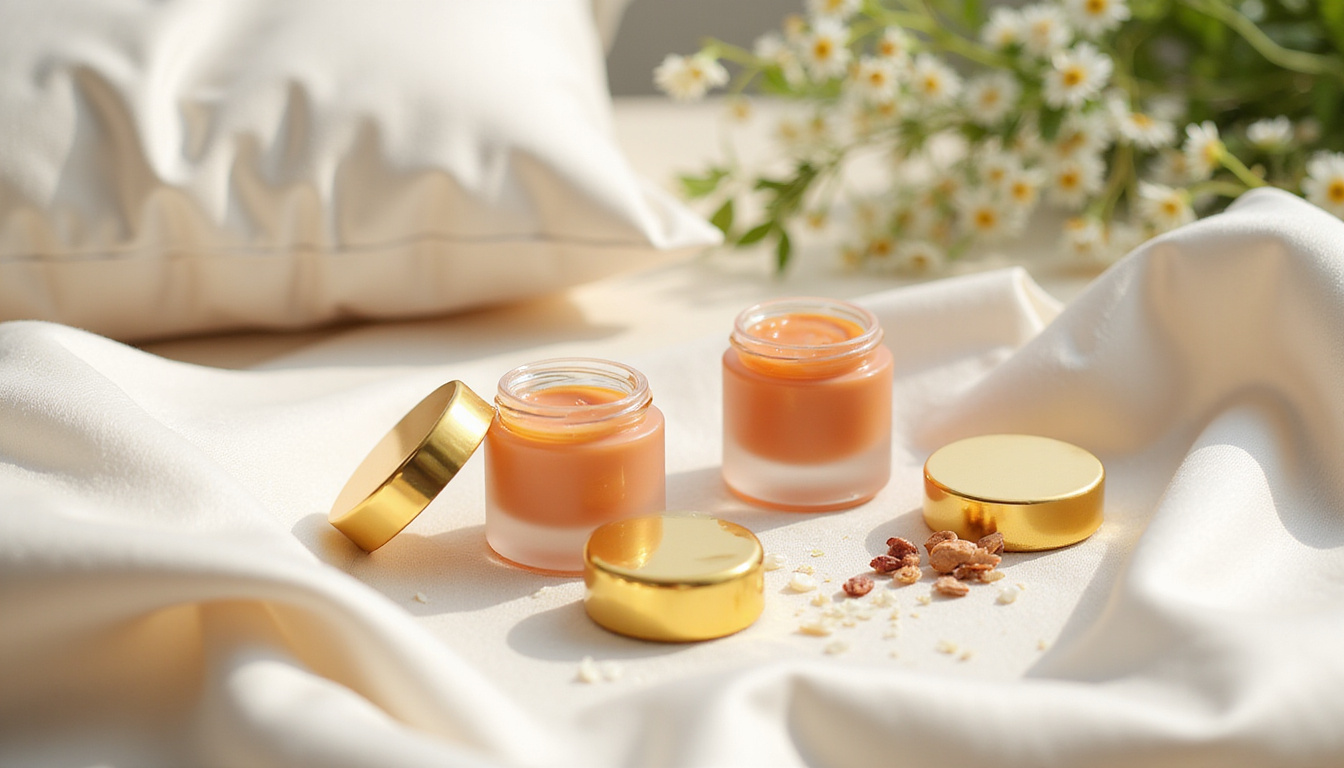
Fragrance and flavor
High-end lip products typically treat scent and flavor as part of the sensorial “architecture.” However, fragrance and flavor components are also among the most common sources of irritation on the lips. In a luxury context, thoughtful formulation may involve:
- Lower overall fragrance levels
- Use of more refined aroma compounds
- Consideration of potential allergen disclosure (where required)
Elegance, in this case, is as much about restraint as it is about indulgence.
Skin Compatibility and Sensitivity Considerations
The lip area is a frequent site of cosmetic intolerance, especially with fragranced or heavily flavored products. Luxury lip care is often expected to feel comforting—not simply by being thick or occlusive, but by being well-tolerated for sustained, repeated use.
Formulation strategies that may support compatibility
- Gentle humectant systems: Overly aggressive humectant loading, particularly without sufficient occlusives and emollients, can feel paradoxically drying once the product wears off. Well-balanced luxury formulas tend to integrate humectants within a robust lipid network.
- Careful surfactant and solvent use: When lip care includes pigment or sunscreen, emulsifiers and solvents must be chosen to minimize disruption of the already-delicate barrier.
- Moderation with potential irritants: Essential oils, menthol, certain flavor components, and strong actives may be minimized or avoided in some higher-end soothing products, especially those framed as “repairing” or “comforting.”
That said, “luxury” is not synonymous with “gentle.” Some prestige lip products are highly fragranced or include tingle-inducing ingredients to signal sensorial intensity. Consumers with reactive lips may need to scrutinize ingredient lists and favor brands that publish clear compositional details.
For general guidance on lip health and irritants, resources from dermatology-focused organizations such as the American Academy of Dermatology can offer neutral, ingredient-level context (source: AAD).
Brand Transparency and Trust in the Luxury Segment
Trust is an implicit component of the luxury skincare experience. Yet the degree of transparency in luxury lip care varies widely.
What transparency can look like
- Detailed ingredient lists: Clear INCI naming without vague umbrella terms
- Formulation philosophy explanations: Information on why certain ingredients are prioritized (e.g., focus on barrier lipids, fragrance minimization, or texture design)
- Stability and safety testing summaries: High-level summaries of how products were assessed for stability, microbial safety, and compatibility with the lip area
- Honest performance framing: Descriptions that focus on comfort, finish, and user experience rather than dramatic, absolute transformation claims
Consumers evaluating luxury lip products may wish to look for alignment between what a brand says and what appears on the ingredient list. Claims of “rich nourishment,” for instance, should ideally be supported by a coherent blend of emollients and occlusives, not mainly lightweight texturizers and fragrance.
Routine Standards: Building a Luxury-Level Lip Care Ritual
A “luxury” lip routine does not need to involve many steps. Instead, it is defined by deliberate product roles and realistic expectations. A considered lip care framework can be summarized as follows:
Baseline daily conditioning
- A comfortable, well-formulated balm, cream, or treatment used consistently.
- Focus on barrier support, non-irritating humectants, and an agreeable finish that encourages frequent use.
Targeted comfort during increased stress
- During cold weather, travel, or after long exposure to indoor heating or air conditioning, a more cushioning formula may be useful.
- Look for products that feel particularly protective without creating excessive buildup or stickiness.
Occasional gentle surface refinement (if desired)
- Some individuals choose to incorporate very mild mechanical or chemical smoothing.
- For the lip area, restraint is key; overly aggressive exfoliation can create more dryness and reactivity.
Integration with color products
- Fine textures in luxury lip care are often engineered to layer cleanly under lip color.
- A high-quality conditioning base may help color products glide more evenly and feel more comfortable, though it is not a solution to fundamentally drying formulas.
The “standard” of a luxury lip routine, then, is not complexity but coherence: products that work together, feel pleasant to use, and respect the lip’s structural limits.
When Luxury Lip Care Aligns—and When It Falls Short
The strengths of luxury lip care as a category often include:
- Enhanced sensorial refinement: Better attention to texture, finish, and wear
- Thoughtful ingredient combinations: More nuanced interplay of humectants, emollients, and occlusives
- Elevated user experience: Packaging, applicators, and sensory cues designed to encourage consistent use
However, there are recurring limitations and caveats:
- Not all formulas outperform simpler options: Some prestige lip products are essentially standard balm structures with added fragrance and aesthetic tweaks.
- Brand narrative may outpace evidence: Stories around rare botanicals or proprietary complexes may be emphasized more than clear, function-based ingredient discussions.
- Sensitivity risks remain: Fragrance, flavors, and certain “luxury signals” (like tingling actives) can still provoke irritation, especially with frequent application.
- Performance is subjective: Comfort, finish, and perceived softness are inherently experiential; different lips and preferences may not uniformly align with a given “luxury” texture.
Approaching the category with curiosity rather than assumption will typically yield a better match between product and personal needs.
FAQ: Understanding High-End Lip Treatments
Q1: Does high-end lip care always hydrate better than basic balms?
Not necessarily. Hydration and comfort depend on the overall formula architecture and how consistently it is used. Some luxury lip care products are meticulously balanced and may feel more comfortable and longer-wearing; others mainly add aesthetic flourishes to familiar balm structures. Evaluating the blend of occlusives, emollients, and humectants is more reliable than relying on category or positioning.
Q2: How can I tell if a premium lip treatment is actually well-formulated?
Look for clear ingredient lists with a mix of barrier-supporting lipids, emollients for slip and softness, and humectants in moderation. Excessive fragrance, numerous essential oils, or strong sensory stimulants may be a sign that sensorial “impact” is being prioritized over gentle everyday compatibility. Texture in use—how the product spreads, wears, and fades—also reveals much about its design.
Q3: Are luxury lip products suitable for very sensitive lips?
Some are specifically designed with a more minimalist, comfort-focused philosophy, but “luxury” as a label does not guarantee suitability for sensitivity. For reactive lips, fragrance-light or fragrance-free options, simpler formulas, and clearly explained ingredient choices are often safer starting points. Patch testing around the lip contour and cautious introduction can help gauge individual tolerance.
A Measured Perspective on Luxury Lip Care
At its best, luxury lip care represents a refinement of small details: the exact melt of a balm on contact, the invisible yet protective film left behind, the way a product encourages you to reapply because it simply feels good. These nuances can support better consistency in use, which tends to be more impactful than any single “hero” ingredient.
Yet the luxury label alone is not a guarantee of superior performance, gentleness, or formulation sophistication. Many of the most meaningful decisions—balanced humectants, stable emollients, restrained fragrance, a coherent barrier strategy—are equally available to less conspicuous products.
A discerning approach to this category involves reading beyond the story: understanding the structural needs of the lips, recognizing what formulation elegance looks like in practice, and aligning expectations with what the anatomy of the lip can reasonably accommodate. In doing so, luxury lip care becomes less about status and more about standards—of ingredient thoughtfulness, sensory design, and respect for the skin it is meant to serve.